
Introduction
Education has long been viewed as a process of preparing children for the future. Rooted in the industrial era, this linear approach aimed to produce academically qualified individuals for stable careers. While it once served economic needs, it has gradually evolved into a system that prioritizes qualifications over true capability.
However, this model has limitations. It creates individuals equipped to handle known problems but often unprepared for new and evolving challenges. Education today must go beyond future readiness and focus equally on the experiences children undergo in the present. It should help them discover their strengths, build confidence, and engage meaningfully with the world around them.
The Limitations of Academic-Centric Learning
In conventional education, academic ability is often mistaken for intelligence. Skills such as reading, writing, and mathematical reasoning dominate the learning process, while other forms of intelligence are overlooked.
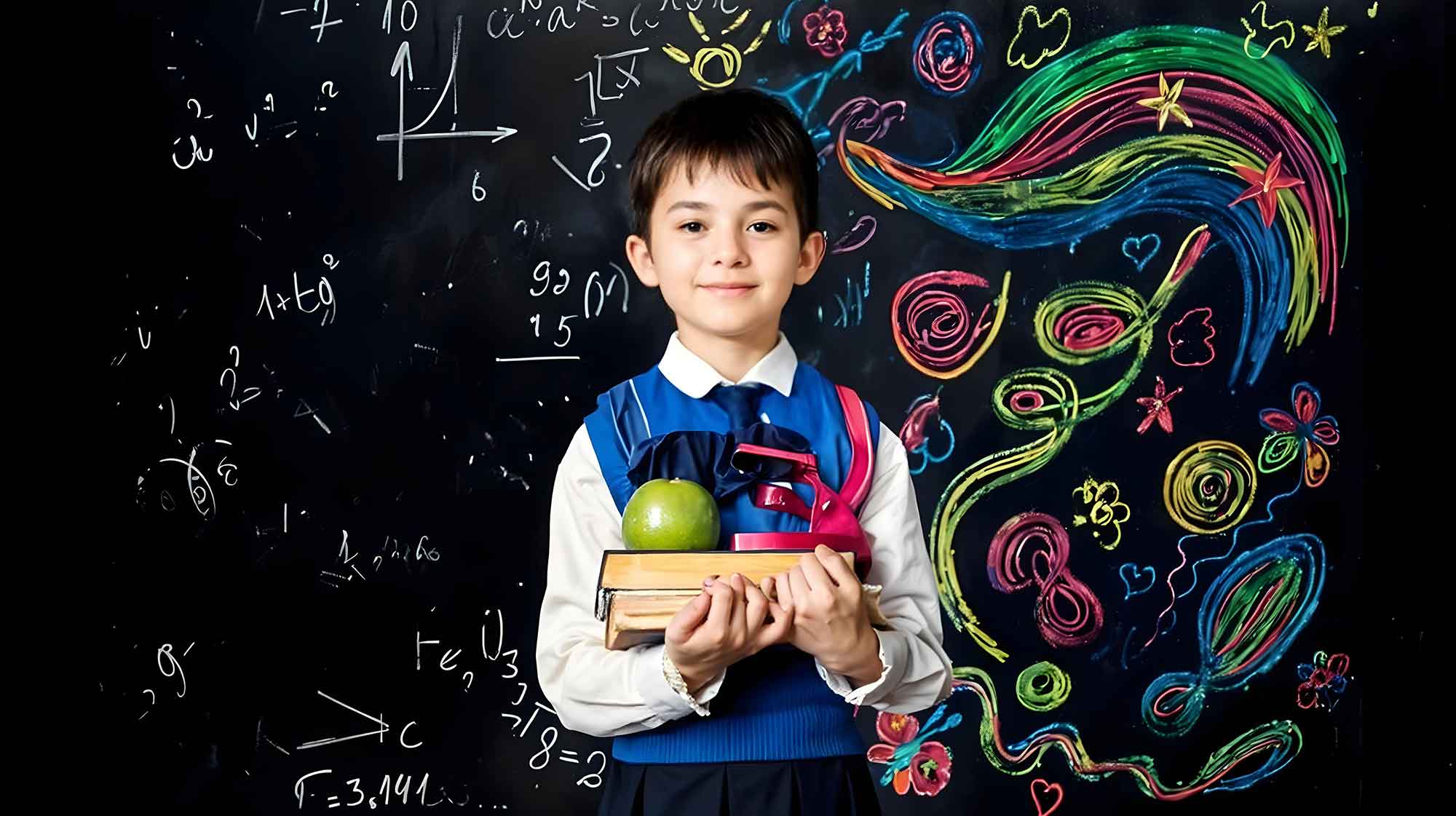
Human potential extends far beyond academics. Creativity, artistic expression, innovation, and emotional understanding are equally important in shaping individuals and societies. When education focuses only on academic outcomes, it ignores these critical dimensions of intelligence.
For example, a musician or artist cannot fully express their ideas through written exams or formulas. Their intelligence lies in how they think and express through their medium. Creative schooling addresses this gap by enabling children to develop both academic knowledge and the skills required to express their innate abilities.
The Natural Development of Thought and Expression
Children’s cognitive development plays a crucial role in how creativity emerges. Between the ages of two and six, children primarily store experiences as images and emotions through sensory learning. As they grow, particularly between seven and eleven years, they begin to think symbolically, using concepts and patterns to interpret their experiences.
This stage marks a significant shift, where children start transforming their thoughts and feelings into structured forms of expression such as art, music, and storytelling. It is during this phase that imagination becomes more organized, and creative energy begins to take shape. This natural progression highlights that creativity is not separate from learning—it is an essential part of it.
Creativity as a Process of Growth
Creativity is often misunderstood as an inborn artistic talent. In reality, it is a dynamic process that involves generating ideas, connecting concepts, and refining them through continuous iteration. It includes the ability to link ideas across different disciplines to create something new and valuable.
Scientific insights into brain development further reinforce this idea. Children are born with highly connected neural networks, but these connections evolve based on exposure and experience. As they grow, unused connections weaken while frequently used ones strengthen.
This means that if a child’s natural abilities are not explored early, they may never fully develop. Creative schooling, therefore, focuses on providing the right experiences and opportunities that help children discover and nurture their potential.
Understanding the Creative Learning Process
Creative learning is not a one-step activity but an ongoing process. It involves acquiring the necessary skills to express ideas, generating those ideas through curiosity and imagination, and refining them through evaluation and iteration.
This journey often requires time, patience, and the freedom to experiment and make mistakes. Without going through this process, creativity cannot reach meaningful outcomes.
Creative schooling goes beyond exposure to activities—it guides children through this entire journey, helping them transform ideas into tangible expressions and real-world applications.
The Need for Educational Transformation
For years, education systems have been driven by economic priorities, focusing primarily on producing academically qualified individuals. In doing so, they have often overlooked skills that contribute to cultural, creative, and personal development.
Even today, academic achievements are widely celebrated, while talents developed beyond textbooks receive less recognition. This imbalance limits children’s ability to explore their full potential and understand their unique strengths.
A more effective approach requires shifting from standardized education to a more personalized model—one that recognizes each child’s learning orientation and nurtures their creativity alongside academics.
Conclusion:
Creative schooling represents a necessary shift in how we view education. It emphasizes not just what children learn, but how they learn and express themselves. By focusing on creativity, individuality, and meaningful learning experiences, education can move beyond its traditional limitations. It can nurture confident, adaptable individuals who are capable of thinking differently and shaping the future.
In a world that increasingly values innovation, embracing creativity is no longer optional—it is essential.