
“To be a teacher does not mean to affirm such a thing is so, or to deliver a lecture, To be a teacher in the right sense is to be a learner. Instruction begins when you, the teacher, learn from the learner, put yourself in his place so that you may understand what he understands and in the way he understands it”
Soren Kierkegaard (Philosopher)
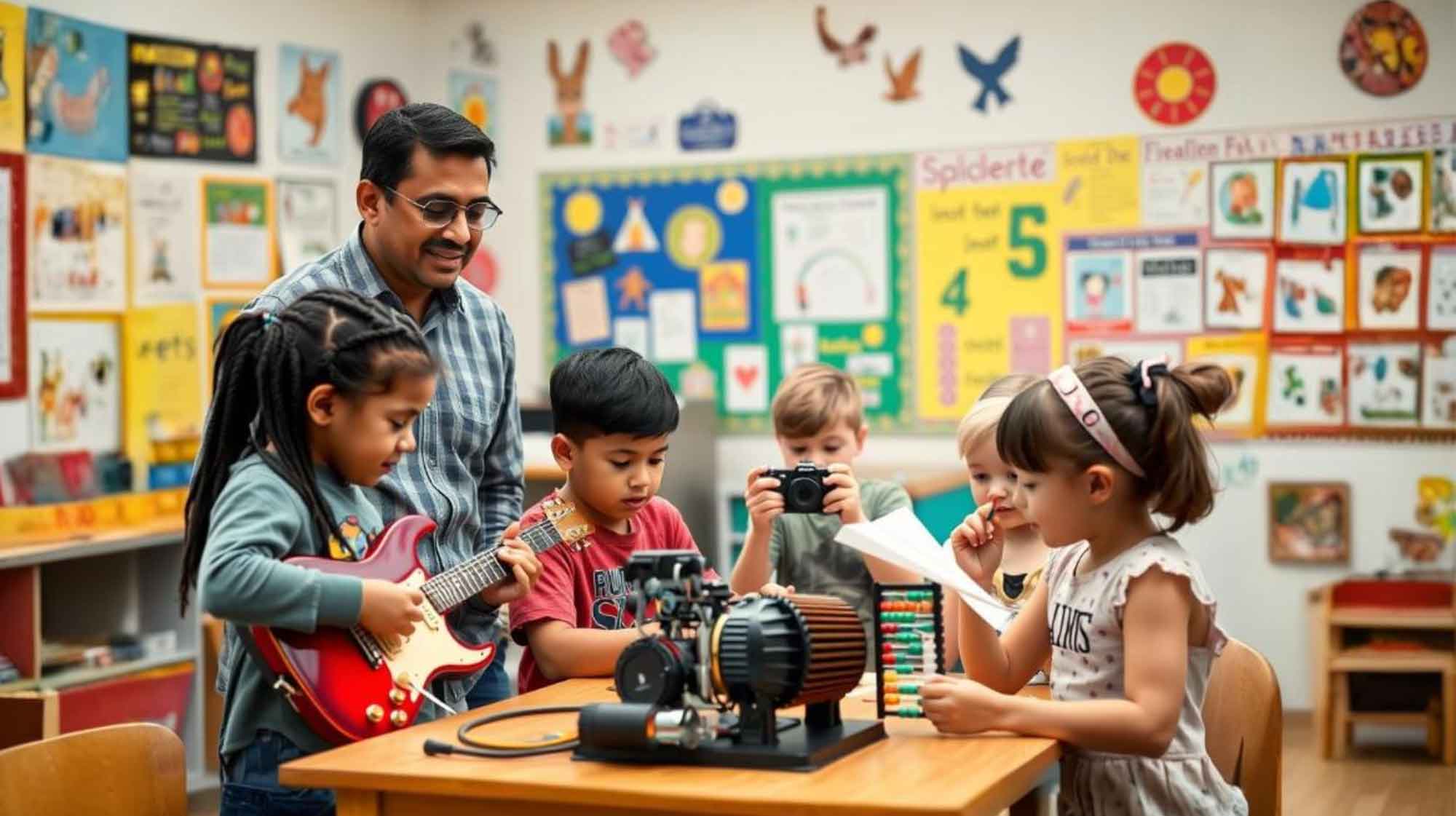
In today’s rapidly evolving world, flexibility in teaching is no longer an option—it is a necessity. When educators adapt their teaching styles to meet the unique needs of each learner, they unlock creativity, confidence, and curiosity in young minds.
Unlike traditional approaches that focus primarily on delivering content, a personalized approach begins with understanding the child—what they know, how they think, and how they process information. True teaching is not just about delivering knowledge; it is about discovering how each learner experiences and understands the world around them.
Kierkegaard’s words remind us that effective teaching begins with empathy. Knowing the learner is not optional—it is essential. When teachers step into the learner’s perspective, teaching transforms from instruction into inspiration.
How do we as teachers achieve flexibility?
Flexibility is built through conscious effort and reflection:
- Observe before teaching: Pay attention to how a child responds, questions, and engages.
- Encourage asking questions: Create an open space where learners feel comfortable expressing doubts.
- Adapt teaching methods: Use a mix of visual, auditory, and experiential approaches.
- Create a supportive environment: Encourage curiosity and treat mistakes as part of learning.
- Reflect and evolve: Teaching is dynamic and must continuously adapt to the learner.
When teachers become learners first, teaching becomes a shared experience rather than a one-sided process. It is within this shared space that young minds begin to explore limitless possibilities.
Traditional vs Progressive Teaching Methods: –
Traditional vs Progressive Teaching Methods
Education today often balances between traditional and progressive approaches.
Traditional methods tend to emphasize:
- Curriculum completion
- Examination results
- Standardized delivery
While important, this approach often reduces teaching to information transfer. In today’s digital world, where tools like Google and ChatGPT provide instant access to knowledge, schools are no longer the only source of information.
Education thinker Ken Robinson compares teaching to farming. Just as a farmer creates the right conditions for plants to grow, teachers must create environments where learning can flourish naturally.
A progressive approach focuses on:
- Learner-centered environments
- Exploration and self-discovery
- Skill development and creativity
- Recognition of individual differences
The goal is not to replace one method with another, but to balance both—choosing what best supports the learner.
Learning Spaces:
Learning spaces are not limited to physical classrooms. They are shaped by multiple dimensions:
- Psychological: Emotions, beliefs, past experiences, and motivation
- Cultural: Values, traditions, and attitudes
- Social: Interactions with teachers, peers, and family
- Institutional: Curriculum, policies, and assessment systems
- Physical: Infrastructure, seating, and environment
These dimensions collectively influence how children engage with knowledge and develop their understanding. A well-designed learning space nurtures curiosity, confidence, and adaptability.
The Importance of Environment in Early Learning
During early years, children absorb knowledge rapidly through experiences, emotions, and interactions. Their environment plays a critical role in shaping:
- Learning habits
- Problem-solving skills
- Emotional responses
- Cognitive development
By creating the right learning environment, educators can influence not just academic success but also a child’s mindset and ability to learn in any situation.n will shift the whole idea of performance to growth, speed to depth and uniformity to individuality.
The Virtue of Slow Education
In a fast-paced academic culture, the concept of slow education offers a meaningful shift. Advocate Maurice Holt emphasizes understanding over speed.
Key insights include:
- Deep engagement instead of surface learning
- Intrinsic motivation over external pressure
- Emotional well-being alongside academics
- Mastery instead of memorization
Countries like Estonia reflect elements of this philosophy by focusing less on excessive testing and more on meaningful learning.
Slow education does not slow progress—it enriches the learning process, making it more reflective and lasting.
Schooling Should Not Kill Creativity:
Schools must be spaces where creativity is nurtured and protected. Education should go beyond marks and rankings to value:
- Curiosity
- Resilience
- Empathy
- Individual strengths
When children feel valued for who they are, their confidence grows and intrinsic motivation develops. Instead of producing a few toppers, schools should aim to create an environment where every child has a success story.
Does Schools Need to Reform?
Schools and educational institutions must begin to measure their success differently too – not merely by the number of A grades their students fetch in Academics. If our way of schooling was right, then the blight of unemployment wouldn’t have affected those who have done everything, we expected of them till their graduation. There was a time when a degree would guarantee you a job; but no more. Studies indicate that a significant percentage of the youth population faces long-term unemployment, which should be in the millions globally. A degree in college The answer is clear—yes.
In today’s world, a degree alone does not guarantee success. Education must shift its focus toward holistic development:
- Academic knowledge with emotional intelligence
- Creativity with communication skills
- Learning with real-world application
Education should develop the whole child—not just intellectually, but socially and emotionally as well
Teaching for Transformation: The Role of Educators
To enable true learning, teachers must adopt multiple roles:
Facilitator / Mediator
Builds trust, observes learners, and encourages reflection.
Creates a safe and supportive learning environment.
Subject Expert (SME)
Delivers concepts in structured and engaging ways.
Uses varied methods to suit different learning styles.
Evaluator
Uses assessments to guide improvement, not just measure performance.
Provides constructive and meaningful feedback.
Coach / Mentor
Guides students through real-world applications.
Supports emotional growth and helps discover passions. student finally becomes and not just what the student knows.
The Integrated Educator
A transformational teacher moves fluidly between these roles—adapting to the learner’s needs and stage in the learning journey.
This flexibility ensures that teaching is not merely transactional but truly transformational.
Conclusion: –
Flexibility in teaching is essential for holistic education. When teachers adapt their methods to suit the learner, they create an environment where curiosity thrives and potential unfolds.
Irrespective of a child’s pace, background, or ability, meaningful teaching can ignite passion, build confidence, and inspire lifelong learning.
“When teachers work with a divine brush; they paint with patience and vision, Their flexibility awakens young minds to create their own limitless horizon”.
– SchoolWizard