
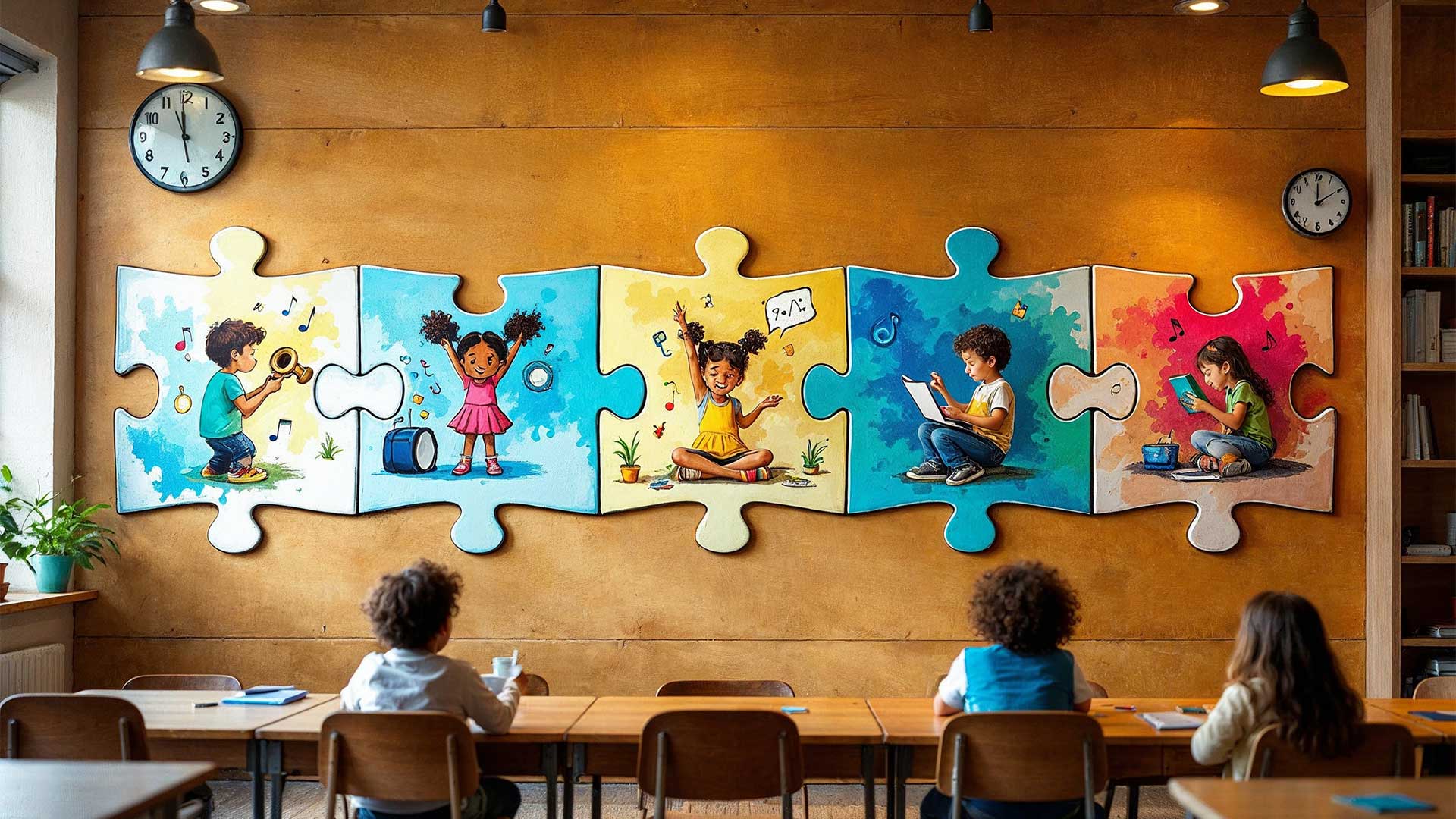

Process of Learning or Internalizing Knowledge:
According to researcher, psychologist David Kolb, learning is a process of acquiring knowledge; which happens by a combination of grasping an experience and then transforming it based on how you internalize it; it could be just for understanding it by reflection or it could be by experimenting it actively with a purpose of learning in mind.
So, learning equals Grasping Information + Transformation (Mode of internalizing that information).
Different ways a child internalize Knowledge, OR How the child takes in information as they learn:-
So, we take hold of a real-world experience in terms of information either by: –
Relating it to a concept, OR a Belief, or a symbolic representation, OR
By a feeling we felt from a tangible event.
This first process of internalizing knowledge is called Grasping.
The information grasped is then figuratively written or represented in our mind in the way we approach using that information. It could be either by comparing with similar mental images in the past to attain an understanding of this experience, which is called internal reflection, or it could be by active experimentation to attain new possibilities. Accordingly, the new experience will be thus written into our minds.
Thus, this second process of internalizing knowledge is called Transformation.
Note: – Depending on the intensity of this transformation, it will be memorized in our brains.
Example:- We experience a good dish in a restaurant, our learning involves experiencing it through our senses; either by relating it to an earlier experience with a similar dish or it could’ve been a completely new one; so this part of the process is grasping an information and when based on our understanding of the experience we figuratively represent this experience in our mind for future use; that is called transforming.
And depending on how the child grasps or transforms the grasped information, the knowledge internalized will also be different.
When a subject or experience, or discipline is taught in class;
- If the child is not able to relate to any previous concepts or experiences; then the child would rely on the tangible felt qualities of the immediate experience; then it means the child has grasped the information in apprehension[Experiencing it first time] and if this grasped information is further internalized or transformed by an internal reflection of familiar states of mental imagery of events in the past then this would lead to internalizing of divergent knowledge.
- If the child can relate the new information to an already perceived knowledge or a similar feeling of a tangible event in past; then the child has comprehended the information and if this grasped information is further internalized or transformed by an internal reflection of mental imagery in the past then this would create assimilative knowledge.
- If the child can grasp the information, comprehending with an experience, and use this information to solve a situation or, for example, a math problem, it is convergent knowledge.
- If the child grasps the experience in apprehension and then transforms by experimenting further on it, the knowledge acquired is called Accommodative knowledge. For ex, A mindset to develop & explore a new idea further.
“Memories are created by what we do, not by what we think “
~ Byron Pulsifer
So, internalizing information in a class depends a lot on the exposure of the child to similar situations in the past. Now, how the child transforms themselves once they grasp the information makes a big difference. That’s why even if a child appears to be a slow learner, once they grab the information, how they use that information depends on their learning orientation or thinking styles. For ex, a child who is slow in understanding a new concept could be way smarter in applying it in real situations because of the way the child would’ve learned it. (Please refer to earlier blogs that explore different forms of thinking styles in children.)
So, whatever environment the child is in, if the event in that environment stimulates the brain of the child, then they will depict it in their actions, if not then the experience might be new to them and depending on the intensity of the experience this will create new neural circuits which is required to remember the information for future use.
Teaching faculty also need to be aware, the way a child grasps information will also depend on the learning orientation of the child (Learning styles + Thinking modes + Learning space or ecosystem). Thus, the learning orientation of a child attending a class makes a big difference in the way they internalize information correctly.
Now this doesn’t mean the child cannot develop or adapt to the required learning orientation, it’s possible, just that the child needs guidance. We will discuss more on how to attain a much more flexible learning orientation in children in future blogs.
Importance of the right Learning Space:-
We have discussed about Learning styles & Thinking modes in earlier articles, so please refer to them to understand more about learning orientation. When we say learning space, generally there is a tendency to conjure that to the physical classroom environment. But the Learning Space is much more than that, and according to experiential theory by psychology experts, it involves physical, cultural, institutional, social and psychological aspects that influence a child.
| Psychological | Learning Styles, Learning skills, Beliefs, Memories, Aesthetic Sense, Home |
| Social | Peers, Teachers, Community or Friends |
| Institutional | General Policy, Goals for Faculty, Vision, Approach |
| Cultural | Language, Traditions |
| Physical | Classrooms, Interior, Environment |
Learning space for education should be defined considering the learner in mind and not created objectively by the teachers based on the knowledge they offer in their course. Children need to grow with a flexible learning orientation that would enable them to learn in any situation or learning space, but achieving this should also be a prime objective of schooling.
“You can teach a student a lesson for a day, but if you can teach him to learn by creating curiosity, he will continue the learning process as long as he lives“.
~ Clay P. Bedford
Without being able to facilitate the right learning space for every child, our schools and faculty generally would end up forcing the children to learn in a very objective environment [Made for learning the subject, which may or may not be aligned with the child’s learning space or orientation. Non-performance or slowness in learning could also be linked to the environment set for them to learn. Either the teacher should be able to realize it ahead and ensure the child is not being labelled as weak, or the parents should proactively enable the child to adapt to any environment by working on their learning orientation during early childhood. This requires lots of awareness both for the faculty, school, parents and children.
So, different children learn different disciplines at different paces, and this diversity is because of their early learning experience as kids. As academicians, we should be able to factor in this difference into their educational curriculum; in a way that each child after 12 years of schooling, is made capable enough to easily adapt to different learning situations, thereby making them lifelong learners who are collaborative, creative, adaptive and one with a growth mindset.